
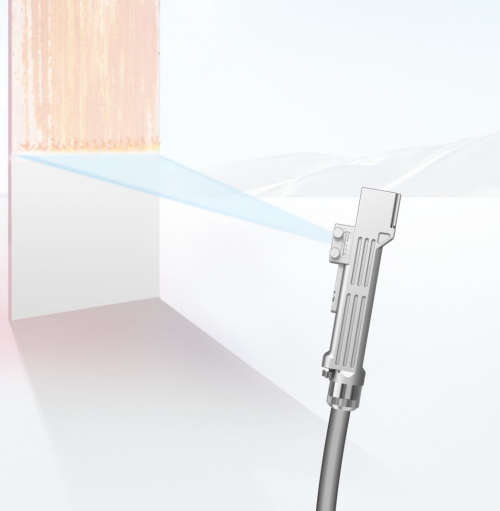

Handheld Laser Cleaning Machine — Model UK-UA1-QXJ
Categories: All, Laser Cleaning Machine
Brand: Handheld Laser Cleaning Machine
Handheld Laser Cleaning Machine — Model UK-UA1-QXJ
Product Overview
The UK-UA1-QXJ Handheld Laser Cleaning Machine is a state-of-the-art, water-cooled laser surface cleaning system engineered by Youkong that represents a transformative advancement in industrial surface treatment and preparation technology. Designed to replace — and decisively outperform — traditional surface cleaning methods including mechanical grinding, chemical stripping, sandblasting, and manual wire brushing, the UK-UA1-QXJ harnesses the extraordinary precision and power of fiber laser technology to deliver clean, contaminant-free surfaces with unmatched control, consistency, and environmental responsibility. Laser cleaning is one of the most rapidly growing applications of industrial laser technology worldwide — and for compelling reasons. As manufacturers across aerospace, automotive, shipbuilding, electronics, cultural heritage preservation, and general industrial maintenance increasingly discover the limitations of conventional cleaning methods — their chemical hazards, physical substrate damage, waste disposal burdens, inconsistency, and labor intensity — the laser cleaning process emerges as a superior alternative that addresses all of these shortcomings simultaneously. The UK-UA1-QXJ is Youkong's flagship handheld laser cleaning system, delivering this transformative technology in a practical, operator-friendly, and industrially robust package. At its heart, the UK-UA1-QXJ uses a high-power pulsed or continuous fiber laser beam — operating at a wavelength of 1070±10nm and delivering up to 2000W of optical power — to selectively ablate, vaporize, or sublimate surface contaminants and unwanted coatings from substrate materials. The physics of this process are elegant and precise: because different materials absorb laser energy at different rates, the laser parameters can be tuned so that the contaminant layer absorbs sufficient energy to be removed, while the underlying substrate absorbs insufficient energy to be damaged. The result is a cleaned surface that is free of rust, paint, oil, oxides, coatings, and other contaminants — without any mechanical abrasion, chemical reaction, or physical contact with the substrate. The handheld design of the UK-UA1-QXJ is a defining practical feature — it puts the cleaning capability directly in the operator's hands, enabling the cleaning of surfaces in any orientation, at any location, on parts of any size and shape, in situ without disassembly. This handheld flexibility, combined with the machine's water-cooled architecture that supports sustained high-power operation, makes the UK-UA1-QXJ equally at home in production facility cleaning applications, field maintenance operations, large structure cleaning projects, and precision component preparation tasks.The Science of Laser Cleaning — How It Works
To fully appreciate the capabilities and advantages of the UK-UA1-QXJ, it is valuable to understand the fundamental physical mechanisms that underpin the laser cleaning process. Laser cleaning is not a single process — it encompasses several distinct physical phenomena that can be selectively activated and combined depending on the specific cleaning application:Laser Ablation
Laser ablation is the primary mechanism in most laser cleaning applications. When the focused laser beam strikes a surface, it delivers a concentrated burst of energy that is absorbed by the surface material. If the absorbed energy exceeds the binding energy of the contaminant molecules or the vaporization threshold of the contaminant material, the contaminant is rapidly vaporized or ejected from the surface. The key to selective cleaning is that the laser wavelength, pulse duration, and power density are chosen such that the contaminant material absorbs far more energy than the substrate — so the contaminant is efficiently removed while the substrate experiences minimal energy absorption and no damage.Photomechanical Cleaning
In some applications — particularly the removal of thin, tightly adherent layers such as oxide films, thin paint coatings, or surface contamination on delicate substrates — photomechanical cleaning is the dominant mechanism. When the laser pulse is absorbed by the contaminant layer, it causes rapid thermal expansion that generates a shock wave at the contaminant-substrate interface. This shock wave mechanically detaches the contaminant layer from the substrate without requiring the contaminant to be fully vaporized — enabling gentle, substrate-safe cleaning of thin films and delicate surfaces.Photothermal Cleaning
For contaminants such as oils, greases, and organic residues that have low vaporization temperatures, photothermal cleaning is highly effective. The laser energy heats the contaminant rapidly to its vaporization temperature, causing it to evaporate cleanly from the surface. Because the heating is rapid and localized, the thermal energy does not have time to conduct deeply into the substrate — minimizing any thermal effect on the underlying material.The Wavelength Advantage — 1070±10nm
The UK-UA1-QXJ operates at a laser wavelength of 1070±10nm — the characteristic output wavelength of ytterbium-doped fiber lasers. This wavelength is exceptionally well-suited for industrial cleaning applications because:- It is strongly absorbed by the metallic oxides, rust compounds, paint pigments, and organic contaminants that are the most common targets in industrial cleaning
- It is relatively well-reflected by many clean metallic substrates — particularly aluminum, copper, and stainless steel — providing a natural "self-limiting" cleaning effect where the clean substrate reflects rather than absorbs the laser energy, naturally stopping the cleaning process once the contaminant layer is removed
- It is efficiently generated by fiber laser technology with high wall-plug efficiency — delivering maximum optical output power for minimum electrical input power
- It is delivered through flexible fiber optic cables to the handheld cleaning head, enabling the full freedom of movement that the handheld design requires
Laser Power — Up to 2000W
The UK-UA1-QXJ delivers a maximum laser power of ≤2000W — a substantial power level that positions this machine at the high-performance end of handheld laser cleaning systems. This power capability has direct implications for cleaning speed, cleaning depth, and the range of applications the machine can address effectively.Power and Cleaning Rate
In laser cleaning, the cleaning rate — the area of surface cleaned per unit time — is directly related to the laser power available. Higher power enables:- Faster scan speeds while maintaining sufficient energy density for effective contaminant removal — directly increasing productivity on large surface areas
- Effective cleaning of thick or strongly adherent coatings that require higher energy densities to overcome the coating's adhesion to the substrate
- Multi-pass cleaning efficiency — higher power allows each pass to remove more material, reducing the number of passes required to achieve the desired cleanliness level
- Cleaning of highly reflective or thermally conductive substrates such as aluminum and copper that require higher peak powers to achieve the necessary energy density at the cleaning zone
Power Range and Adjustability
While the UK-UA1-QXJ is capable of delivering up to 2000W, the system's power is fully adjustable across its operating range. This adjustability is critical because different cleaning applications require very different power levels:- Low power settings for delicate cleaning tasks — removing thin oxide films from precision components, cleaning sensitive electronic assemblies, or treating surfaces where the substrate material has low thermal tolerance
- Medium power settings for general-purpose cleaning — rust removal from steel structures, paint stripping from automotive components, oxide removal from welded assemblies
- High power settings for the most demanding applications — removing thick, multi-layer paint systems from heavy industrial equipment, aggressive rust removal from heavily corroded steel, or stripping strongly adherent industrial coatings from large surface areas
Laser Wavelength — 1070±10nm
The 1070±10nm operating wavelength of the UK-UA1-QXJ is a fundamental technical parameter that defines the machine's material interaction characteristics and cleaning performance. As discussed in the laser cleaning science section, this wavelength is generated by the ytterbium-doped fiber laser at the heart of the system — a laser technology that offers several important advantages for cleaning applications:High Beam Quality
Fiber lasers inherently produce high beam quality — a tightly focused, well-defined laser beam with a small, precise spot size and uniform intensity distribution. In cleaning applications, high beam quality means:- More consistent energy density across the cleaning spot — producing uniform cleaning results without hot spots that could damage the substrate or cold spots that leave contaminants behind
- Better focusability — the ability to create a very small, high-intensity spot for precision cleaning of fine features and tight areas, or to defocus for wider-area, lower-intensity cleaning of large flat surfaces
- More efficient energy delivery to the cleaning zone — maximizing the fraction of laser energy that contributes to contaminant removal versus energy lost to reflection or scatter
Long Service Life
Ytterbium-doped fiber laser sources have exceptional service lives — typically measured in tens of thousands of hours of operation. Unlike lamp-pumped solid-state lasers that require periodic lamp replacement, or CO₂ lasers that require gas replenishment, the fiber laser in the UK-UA1-QXJ has no consumable pump source. This translates directly into lower maintenance costs, higher availability, and greater long-term reliability — important considerations for industrial cleaning systems that may operate continuously for extended periods.Electrical Efficiency
Fiber lasers convert electrical input power to laser output power with significantly higher efficiency than competing laser technologies. This means the UK-UA1-QXJ produces less waste heat per watt of laser output than equivalent CO₂ or lamp-pumped systems — reducing the thermal management burden on the water cooling system and lowering operating electricity costs.Power Supply — AC220V / AC380V
The UK-UA1-QXJ supports two standard industrial power supply voltages: AC220V and AC380V — providing exceptional flexibility for deployment across different facility electrical infrastructure standards worldwide.AC220V Compatibility
The 220V power supply option makes the UK-UA1-QXJ compatible with standard single-phase or three-phase industrial power supply systems found in small to medium manufacturing facilities, workshops, and commercial buildings across Europe, Asia, the Middle East, Africa, and most of the world. This compatibility means:- The machine can be connected to existing power outlets in most workshop environments without requiring electrical infrastructure upgrades or the installation of special high-voltage circuits
- It can be deployed in smaller facilities that may not have 380V three-phase power available
- It is suitable for mobile deployment to locations where only standard 220V power is available — construction sites, shipyards, maintenance depots, and outdoor cleaning operations
AC380V Compatibility
The 380V three-phase power supply option is the preferred choice for high-duty-cycle, continuous operation in large industrial facilities that have three-phase power infrastructure:- Three-phase 380V power delivery is more efficient for high-power equipment — reducing current draw, minimizing line losses, and supporting more stable power delivery to the laser system
- 380V operation is well-suited for sustained maximum-power cleaning operations where the full 2000W laser output is used continuously for extended periods
- Three-phase power distribution is standard in heavy industrial environments — shipbuilding facilities, steel works, automotive assembly plants, aerospace manufacturing, and large infrastructure maintenance operations
Spot Adjustment Range — Line 0–300mm
One of the most operationally significant features of the UK-UA1-QXJ is its line spot adjustment range of 0–300mm. This specification refers to the ability to adjust the shape and size of the laser cleaning spot — from a very small, concentrated point to a wide line beam up to 300mm in length — enabling the operator to optimize the cleaning geometry for the specific surface area, feature size, and cleaning rate requirements of each application.Understanding Spot Adjustment in Laser Cleaning
In laser cleaning, the spot size and shape determine the energy density (power per unit area) at the cleaning surface and the coverage rate (area cleaned per unit time). These two parameters are inversely related for a given power level:- A small spot concentrates all available laser power into a tiny area — creating very high energy density. This is ideal for precision cleaning of fine features, tight corners, and small components where high energy density is needed to overcome stubborn contaminants, but the area being cleaned is small enough that a small spot is practical.
- A large line spot distributes the available laser power across a wide area — reducing energy density but dramatically increasing the area covered per scan pass. This is ideal for cleaning large, flat surfaces where maximum coverage rate is the priority and the contaminant removal does not require extreme energy density.
Precision Cleaning with Small Spots
At small spot sizes, the UK-UA1-QXJ delivers:- Precise, controlled cleaning of small components and fine features — removing contaminants from exactly the areas that need cleaning without affecting adjacent surfaces
- Very high energy density for removing the most stubborn, tightly adherent coatings and contaminants that resist removal at lower energy densities
- Detailed work on complex geometries — inside corners, narrow channels, threaded features, and recessed areas that a large spot beam could not access
- Mold cavity cleaning — removing release agent residue, burned-in contamination, and surface deposits from injection mold cavities with the precision that complex mold geometries require
High-Productivity Cleaning with Wide Line Beams
At the maximum 300mm line width, the UK-UA1-QXJ transforms into a high-throughput surface treatment tool:- Large structural steel surfaces — bridge components, ship hulls, storage tanks, pipeline exteriors — can be cleaned at high speed with the wide beam covering maximum area per pass
- Industrial equipment exteriors, machine frames, and large fabricated assemblies can be efficiently de-rusted, de-painted, or de-scaled without the time-consuming limitations of a small spot beam
- Pre-weld preparation of long seams on large fabrications — cleaning mill scale, rust, and contamination from weld preparation areas quickly and efficiently
- Post-weld cleaning of extended weld seams — removing weld spatter, heat discoloration, and oxide deposits from long weld beads in a single efficient pass
Intermediate Spot Sizes
Between the small spot and maximum 300mm line extremes, the UK-UA1-QXJ's continuously adjustable spot size provides a spectrum of cleaning geometries for every application that falls between these extremes. This continuous adjustability means operators always have access to the optimal spot configuration for their specific task — not a limited selection of fixed spot size options.Water-Cooled Architecture
The UK-UA1-QXJ employs a water-cooled thermal management architecture — a design choice that directly enables the machine's high power output capability and supports sustained high-duty-cycle cleaning operations that air cooling alone could not manage.Why Water Cooling at This Power Level
At power levels up to 2000W, the heat generated by the fiber laser source and associated power electronics during operation is substantial. Effective, reliable thermal management at these power levels requires the superior heat removal capacity of water cooling — which can transfer heat away from critical components far more efficiently than air cooling due to water's much higher specific heat capacity and thermal conductivity compared to air. Water cooling in the UK-UA1-QXJ: Enables Sustained High-Power Operation Water cooling allows the UK-UA1-QXJ to operate continuously at its maximum 2000W output power without thermal throttling — the reduction in laser output power that would occur if components approached their maximum safe operating temperatures. This sustained high-power capability is essential for large-scale cleaning projects where continuous, maximum-intensity operation is needed to meet productivity targets. In contrast, an air-cooled system at 2000W would face significant challenges maintaining component temperatures within safe limits during extended high-duty-cycle operation — potentially requiring power reduction or operation pauses to allow thermal recovery. Water cooling eliminates these limitations entirely. Maintains Laser Performance Consistency The performance characteristics of a fiber laser — output power, beam quality, and pulse parameters — are sensitive to the operating temperature of the laser gain medium. Water cooling maintains the laser source at a stable, controlled temperature throughout operation — ensuring consistent, predictable laser performance regardless of ambient temperature or duty cycle. This temperature stability translates directly into consistent cleaning results — the same laser parameters produce the same cleaning outcome, shift after shift, throughout the machine's service life. Protects Long-Term Reliability Thermal stress is one of the primary mechanisms of premature component failure in high-power laser systems. Every time a component heats up and cools down, it experiences thermal expansion and contraction that imposes mechanical stress on solder joints, optical mounts, and electronic connections. Water cooling minimizes these thermal cycles by maintaining components at stable operating temperatures — extending component service life and reducing the frequency and cost of maintenance interventions. Supports Operation in Hot Environments Many industrial cleaning applications take place in hot environments — summer outdoor cleaning of structures, cleaning within enclosed spaces where ambient temperatures are elevated, or in industrial facilities operating hot processes nearby. Water cooling provides effective thermal management regardless of ambient temperature — the water chiller or cooling circuit removes heat from the machine irrespective of how hot the surrounding environment is, ensuring reliable operation in conditions that would thermally overwhelm an air-cooled system.Water Cooling System Integration
The water cooling system of the UK-UA1-QXJ is fully integrated with the machine's intelligent control system. Coolant flow rate, coolant temperature, and cooling system status are continuously monitored. If the cooling system performance degrades — due to low coolant level, pump failure, or blocked flow — the machine's protection system automatically detects the anomaly and suspends laser operation before any thermal damage occurs. This proactive thermal protection ensures that cooling system issues are caught and addressed before they can cause damage to expensive laser components.Handheld Cleaning Gun — 0.7kg
The cleaning gun of the UK-UA1-QXJ weighs just 0.7 kilograms — an extraordinary weight achievement for a gun that delivers up to 2000W of laser power to the cleaning surface and incorporates all the optical components necessary to focus and scan the laser beam across the cleaning spot.The Significance of 0.7kg Gun Weight
At 700 grams — approximately the weight of a large smartphone — the UK-UA1-QXJ's cleaning gun is light enough that operators can hold and maneuver it continuously for extended cleaning sessions without experiencing the hand and arm fatigue that heavier cleaning tools inevitably produce. This is particularly important for laser cleaning applications, which often involve:- Large surface areas that require extended periods of continuous gun movement to clean completely — ship hull sections, bridge structural components, storage tank exteriors, large industrial equipment
- Overhead and awkward-position cleaning where gravity works against the operator, making gun weight especially critical for sustained, controlled operation
- Precision cleaning of detailed surfaces where fine, controlled gun movement is essential for achieving even, high-quality cleaning results — and where operator fatigue that causes hand tremor or loss of fine motor control directly degrades cleaning quality
Optical System in the Gun
Despite its minimal weight, the UK-UA1-QXJ's cleaning gun houses a sophisticated optical system that:- Receives the laser beam from the fiber delivery cable and collimates it into a parallel beam
- Focuses or shapes the beam to the desired spot geometry — from a small concentrated spot to the maximum 300mm line beam
- Scans the beam across the cleaning surface — either through operator motion or through an integrated beam scanning mechanism — to cover the desired cleaning area
- Protects the internal optics from contamination by the ablated particles generated during cleaning through appropriate optical isolation design
Target Applications — Where the UK-UA1-QXJ Excels
The UK-UA1-QXJ's combination of high power, adjustable spot size, handheld flexibility, and water-cooled sustained operation capability makes it an exceptionally versatile cleaning tool across a wide range of industries and applications:1. Rust and Corrosion Removal
Rust removal from steel and iron structures is one of the most widespread and economically significant industrial cleaning applications, and the UK-UA1-QXJ excels at it. Traditional rust removal methods — mechanical grinding, sandblasting, wire brushing, and chemical pickling — each have significant drawbacks:- Mechanical grinding is labor-intensive, produces large quantities of abrasive waste and metal dust, and can damage the substrate surface
- Sandblasting requires containment infrastructure for abrasive media, generates large volumes of mixed abrasive/rust waste that requires disposal, and can embed abrasive particles in the substrate surface
- Chemical pickling uses hazardous acids that pose risks to operators and the environment, and requires careful waste management
- Structural steel cleaning before painting or coating application
- Pipeline exterior rust removal before protective coating
- Bridge and infrastructure maintenance cleaning
- Heavy equipment refurbishment — cleaning rust from machine frames, hydraulic components, and structural members
- Shipbuilding and ship maintenance — cleaning rust from hull plates, deck structures, and machinery components
2. Paint and Coating Removal
Removing paint, epoxy coatings, powder coatings, thermal spray coatings, and other surface treatments is a major application area for the UK-UA1-QXJ. The laser process offers decisive advantages over conventional paint stripping methods:- No chemical strippers — eliminating the use of hazardous solvents and caustic chemicals, with their associated health risks, environmental regulations, and disposal costs
- No mechanical abrasion — preserving the dimensional accuracy and surface integrity of the substrate beneath the coating
- Selective coating removal — by tuning laser parameters, specific coating layers can be removed while leaving others intact — for example, removing a damaged topcoat while preserving the primer layer beneath
- No substrate heating — the pulsed laser process removes coating material so rapidly that minimal heat is transferred to the substrate, enabling paint removal from heat-sensitive components including thin-gauge sheet metal, aluminum alloy structures, and composite-adjacent metal components
3. Pre-Weld and Post-Weld Cleaning
Surface cleanliness is critical to weld quality — contamination from rust, mill scale, oil, paint, or oxides at the weld joint can cause weld porosity, lack of fusion, cracking, and other defects that compromise the structural integrity and service life of welded assemblies. The UK-UA1-QXJ provides fast, effective pre-weld surface preparation:- Removing mill scale, rust, and surface oxides from weld preparation areas on structural steel
- Cleaning aluminum and stainless steel joint surfaces of oxide layers that inhibit fusion
- Degreasing and removing organic contamination from precision welding joints
- Cleaning tight joint geometries — fillet weld toes, narrow gap joint preparations — that are difficult to clean with mechanical methods
4. Mold Cleaning
Injection molds, die casting tools, and rubber molding dies accumulate release agent residue, burned-in organic deposits, carbon buildup, and surface contamination during production. Conventional mold cleaning methods — solvent cleaning, mechanical scrubbing, dry ice blasting — can be time-consuming, may leave residues, and risk scratching or damaging precision mold surfaces. The UK-UA1-QXJ's laser cleaning process is ideal for mold cleaning because:- No physical contact — the laser cleans without mechanical contact with the mold surface, eliminating any risk of surface scratching or dimensional alteration
- Precision cleaning — small spot sizes enable precise cleaning of complex mold cavity geometry, including fine details, textured surfaces, and tight corners
- Complete residue removal — the vaporization process completely removes organic deposits and residues without leaving cleaning agent residues that could contaminate subsequent molded parts
- In-situ cleaning — molds can often be cleaned in place without removal from the molding machine, minimizing downtime
5. Electronic Component Cleaning
The electronics industry requires extremely precise, damage-free cleaning of sensitive components — removing solder flux residues, conformal coating, oxide layers, and contamination from circuit boards, connector contacts, and precision electronic assemblies. The UK-UA1-QXJ's ability to deliver very low power densities at small spot sizes, combined with the non-contact, residue-free laser cleaning process, makes it suitable for selective cleaning of electronic components without damaging adjacent sensitive elements.6. Cultural Heritage and Artifact Conservation
While a specialized application, laser cleaning has become an important tool in cultural heritage conservation — removing centuries of dirt, pollution deposits, biological growth, and previous restoration materials from stone sculptures, metal artifacts, paintings, and historic structures. The UK-UA1-QXJ's precise, controllable, non-contact cleaning process is ideally suited for this demanding application where irreplaceable objects must be cleaned without any risk of surface damage.7. Nuclear Decontamination
In nuclear facilities, surface decontamination — removing radioactive contamination from equipment, pipes, floors, and structural components — is a critical and challenging process. Laser cleaning is particularly valuable in this context because the process generates minimal secondary waste (only the vaporized contamination plume, which is extracted and filtered) compared to sandblasting or chemical decontamination that produce large volumes of contaminated secondary waste requiring expensive disposal.8. Aerospace Component Preparation
Aerospace manufacturing and maintenance requires precise, controlled surface preparation of aluminum alloys, titanium alloys, and composite materials for bonding, coating, and inspection. The UK-UA1-QXJ's gentle, controlled laser cleaning process — which can remove oxide layers and surface contamination without damaging substrate microstructure or dimensional accuracy — is well-suited for aerospace surface preparation applications.Environmental and Safety Advantages
One of the most compelling aspects of the UK-UA1-QXJ and laser cleaning technology in general is its environmental and safety profile — which is dramatically superior to most conventional industrial cleaning methods:No Chemical Consumables
The UK-UA1-QXJ uses no cleaning chemicals, solvents, acids, or caustic agents. This eliminates:- Procurement, storage, and handling of hazardous chemical cleaning agents
- Risk of chemical exposure to operators during cleaning operations
- Chemical waste disposal requirements and associated regulatory compliance burdens
- Environmental contamination risk from chemical spills or runoff
No Abrasive Media
Unlike sandblasting or bead blasting, the UK-UA1-QXJ uses no abrasive media. This eliminates:- Abrasive media procurement and storage costs
- Mixed abrasive/contaminant waste generation and disposal requirements
- Risk of abrasive media embedding in substrate surfaces — which can cause corrosion initiation sites and adhesion problems with subsequent coatings
- Containment infrastructure required for sandblasting operations
Minimal Waste Generation
The primary waste stream from laser cleaning is the vaporized contaminant plume — a small volume of fine particles and gases that are captured and filtered by a fume extraction system connected to the cleaning area. This minimal, concentrated waste stream is far easier and less expensive to manage than the large volumes of mixed waste generated by sandblasting or chemical stripping.Reduced Operator Health Risks
Compared to sandblasting (silicosis risk from silica dust), chemical stripping (chemical burn and inhalation risks), and mechanical grinding (vibration white finger, noise-induced hearing loss), laser cleaning significantly reduces the range and severity of occupational health risks to cleaning operators. The primary safety consideration is laser radiation — managed through appropriate laser safety eyewear, safety interlocks, and work area controls that are well-established in industrial laser safety practice.Comparison: Laser Cleaning vs. Conventional Methods
| Factor | Sandblasting | Chemical Stripping | Mechanical Grinding | UK-UA1-QXJ Laser Cleaning |
|---|---|---|---|---|
| Substrate Damage Risk | Medium-High | Medium | High | Minimal |
| Chemical Hazards | None | High | None | None |
| Waste Generation | Very High | High | High | Minimal |
| Precision Control | Low | Low | Low | Very High |
| Complex Geometry | Poor | Moderate | Poor | Excellent |
| Automation Potential | Low | Low | Medium | High |
| Operator Health Risk | High (silica) | High (chemicals) | High (vibration/noise) | Low |
| Environmental Impact | High | Very High | Medium | Low |
| Cleaning Consistency | Variable | Variable | Variable | Excellent |
| Operating Cost | Medium | High | Medium | Low (no consumables) |
| Setup/Changeover | Slow | Slow | Fast | Fast |
Be the first to review “Handheld Laser Cleaning Machine — Model UK-UA1-QXJ” Cancel reply


产品透视图展示-300x300.jpg)
Reviews
There are no reviews yet.