
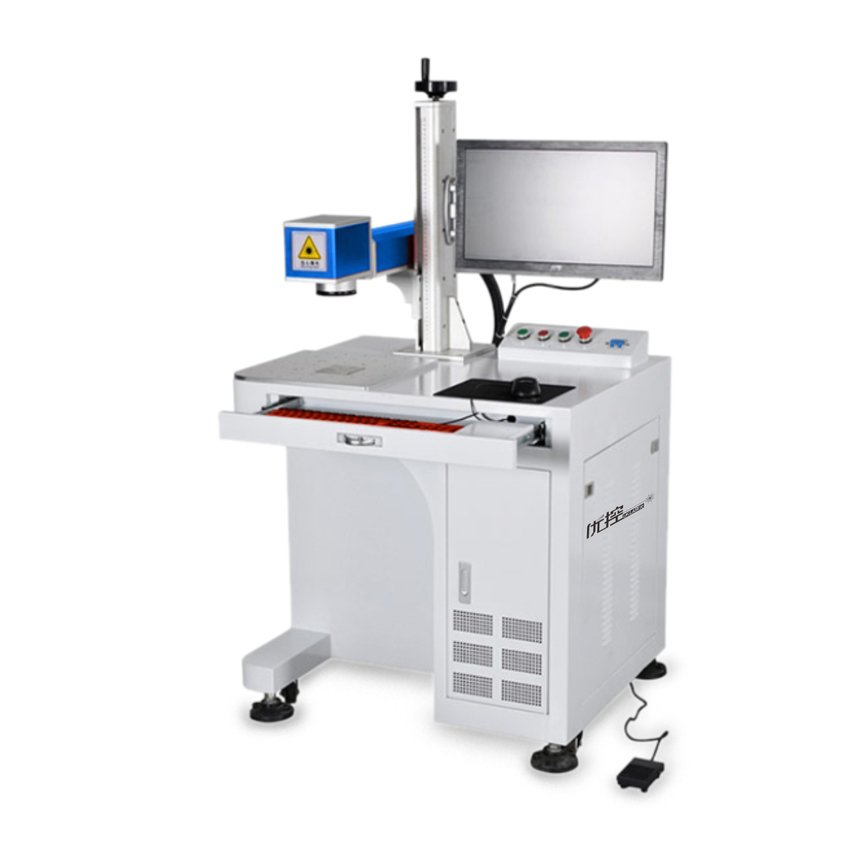
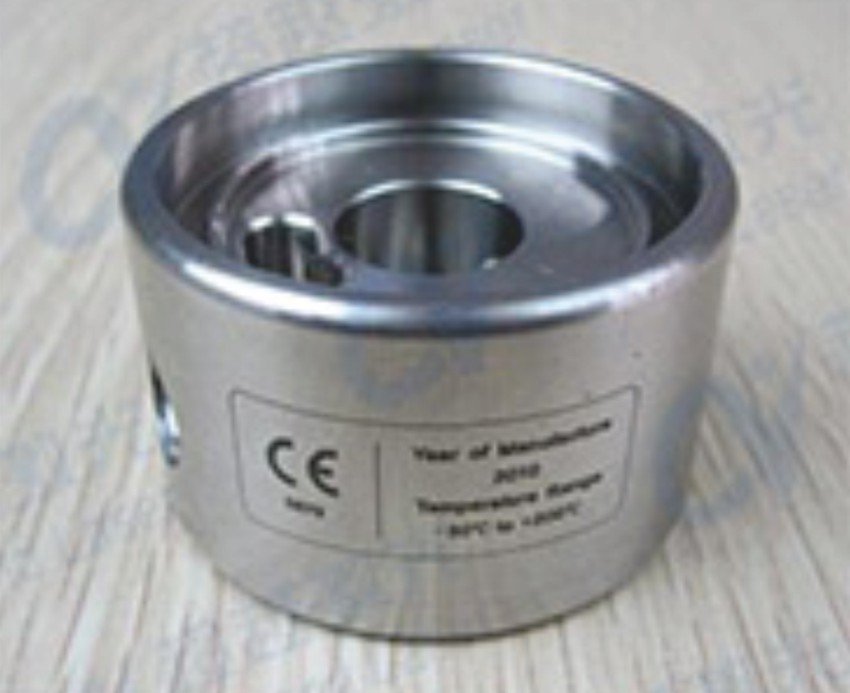
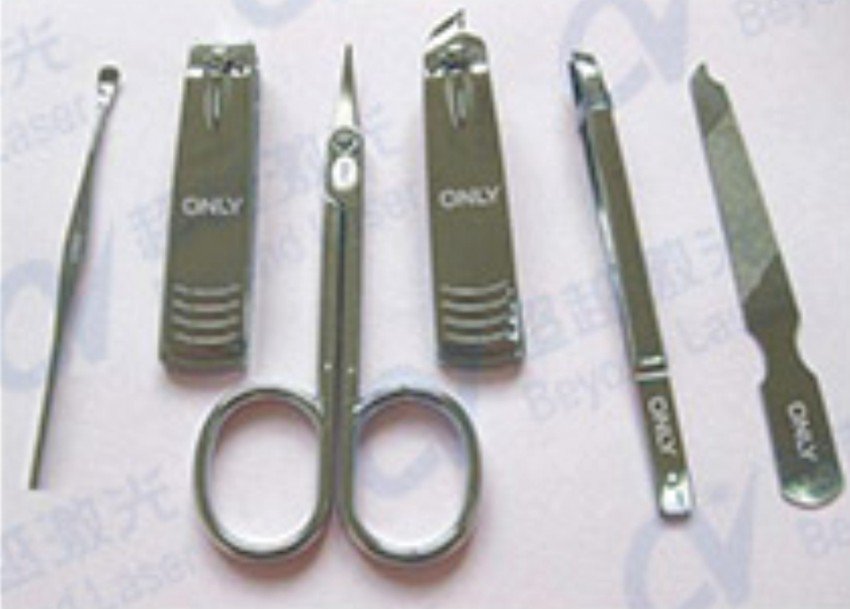
A fiber laser marking machine is a high‑precision, non‑contact marking system used to permanently engrave or mark metals and many plastics with text, logos, barcodes, serial numbers, QR codes, and graphics. It is widely used in industrial production because it delivers fast, accurate, and maintenance‑friendly marking with excellent long‑term stability and very low operating cost.
Working principle
A fiber laser marking machine uses a fiber‑optic laser source that generates a high‑energy laser beam and delivers it through a flexible fiber cable to a galvanometer scanning head, which rapidly moves mirrors to “draw” the mark on the workpiece surface. The laser energy is absorbed by the material, causing localized heating, oxidation, color change, or micro‑engraving, which forms a permanent, high‑contrast mark. This technology offers a very small focused spot size, so it can produce extremely fine details, even on small components or complex designs.
Main components
The system typically includes a fiber laser source (commonly 20W, 30W, 50W, or higher power), a high‑speed galvo head with F‑theta lens, a control cabinet or integrated machine body, industrial PC or controller with marking software, and an operator interface such as monitor, keyboard, and control buttons. The worktable or marking platform may be fixed or equipped with a sliding tray, rotary axis for cylindrical parts, or customized jigs to hold products securely during marking. Some models integrate protective covers, safety interlocks, and fume extraction connections to meet industrial safety standards.
Performance characteristics
Fiber laser marking machines are known for high marking speed, typically suitable for continuous production and automated lines, while maintaining excellent repeatability and precision at small character sizes. The laser has a long service life, often rated in tens of thousands of working hours, and requires almost no routine maintenance compared to traditional lamp‑pumped or CO₂ systems. Because fiber lasers convert electrical power into optical power efficiently, overall energy consumption is low and heat generation is minimal, which improves stability and reduces cooling requirements.
Material compatibility and applications
These machines work especially well on metals such as stainless steel, carbon steel, aluminum, brass, copper, titanium, and various coated or anodized surfaces, and can also mark many engineering plastics and some other non‑metallic materials depending on their composition. Typical application sectors include tools and hardware, automotive components, electronic parts and PCBs, aerospace parts, medical devices, jewelry, bearings, valves, and general serial‑number or logo branding for mass‑produced products. The marks are permanent, wear‑resistant, and resistant to chemicals and high temperatures, making them suitable for traceability, brand protection, and regulatory compliance.
Software and integration
Fiber laser marking machines are driven by specialized marking software installed on a PC or integrated controller, allowing the operator to design layouts, import vector files and images, edit text, set barcodes and QR codes, and control parameters such as power, speed, frequency, and marking depth. Many systems support automatic coding functions like date, batch number, and serial number increments, as well as database connection for production tracking and MES/ERP integration. Depending on the configuration, the machine can be integrated into conveyor lines or robotic cells to achieve fully automated marking with minimal human intervention.
Model: UK-DBZ-FC20 / UK-DBZ-FC30 / UK-DBZ-FC50
-
Maximum laser power: 20 W / 30 W / 50 W
-
Laser wavelength: 1064 nm
-
Beam quality (M²): < 1.5 / < 1.8 / < 2.0
-
Laser repetition frequency: 20 kHz – 80 kHz
-
Marking area: 100 mm × 100 mm (optional sizes available)
-
Engraving depth: 0.4 mm / 0.6 mm / 1.0 mm
-
Engraving speed: ≤ 15000 mm/s
-
Minimum line width: 0.05 mm
-
Minimum character height: 0.15 mm
-
Repositioning accuracy: ±0.002 mm
-
Total machine power: 500 W / 600 W / 1000 W
-
Power supply requirement: 220 V / 50 Hz / 3 A
Be the first to review “Fiber Laser Marking Machine” Cancel reply

产品透视展示图-300x300.jpg)
产品透视图展示-300x300.jpg)
Reviews
There are no reviews yet.