
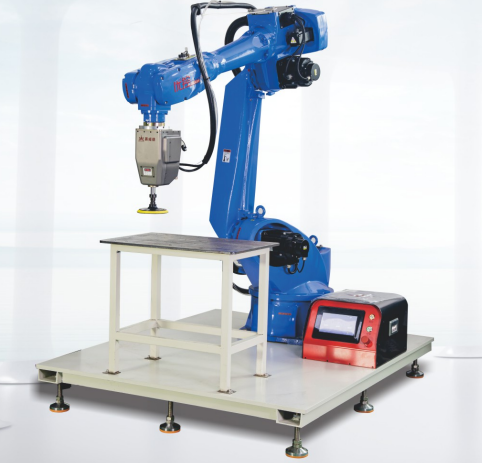

Mechanical Arm Force-Controlled Polishing Machine
Category: All
Brand: Mechanical Arm Force-Controlled Polishing Machine
Mechanical Arm Force-Controlled Polishing Machine
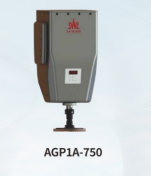
Models: AGP1A-600 & AGP1A-750
Product Overview
The Mechanical Arm Force-Controlled Polishing Machine is a sophisticated, high-precision robotic surface finishing system developed by Youkong that represents a significant advancement in automated grinding, polishing, and surface treatment technology. Available in two models — the AGP1A-600 and the AGP1A-750 — this system is designed to address one of the most challenging problems in industrial surface finishing: the need to apply consistent, controlled contact force across complex, irregular, or curved surfaces while maintaining precise positional accuracy and surface quality.
At the heart of this machine is its defining technological innovation — force control technology. Unlike conventional robotic polishing systems that simply follow a programmed geometric path, a force-controlled polishing machine actively senses and regulates the contact force between the polishing/grinding tool and the workpiece surface in real time. This means the machine continuously adjusts its motion to maintain the exact desired contact pressure — compensating for surface irregularities, dimensional variations between parts, tool wear, and compliance in the workpiece — all without any manual intervention.
This capability transforms robotic polishing from a rigid, path-following operation into an intelligent, adaptive surface finishing process that closely mimics — and in many ways surpasses — the tactile sensitivity and consistency of skilled human polishers. The result is superior surface finish quality, dramatically reduced processing time, elimination of human fatigue-related inconsistency, and significant improvements in production efficiency and cost-effectiveness.
The Force Control Advantage — Understanding the Core Technology
To fully appreciate what makes the AGP1A series exceptional, it is important to understand why force control is so critical in polishing and grinding applications — and why conventional robotic systems without force control fall short.
The Problem with Position-Only Control
In a standard robotic system, the arm follows a pre-programmed path with high positional accuracy. For cutting or welding, this is often sufficient — the tool interacts with the material at a defined location and the process is governed by other parameters such as laser power or wire feed rate. However, for polishing and grinding, the contact force between the tool and the workpiece surface is the primary variable that governs surface finish quality.
If the contact force is too low, the abrasive tool barely engages the surface — material removal is insufficient, cutting efficiency is poor, and the desired surface finish is not achieved. If the contact force is too high, the tool digs aggressively into the surface — causing gouging, scratches, heat buildup, tool damage, and potential workpiece rejection. Achieving the right force consistently is extraordinarily difficult with position-only control because:
- Workpieces have dimensional variations from part to part due to manufacturing tolerances
- Curved and complex surfaces change the effective tool-surface contact angle continuously along the path
- Tool wear changes the effective tool geometry over time, altering the contact dynamics
- Workpiece fixturing variations mean parts are not always in exactly the same position
How Force Control Solves These Problems
The AGP1A series addresses all of these challenges through its integrated force sensing and real-time force regulation system:
- A high-precision force/torque sensor continuously measures the actual contact force between the polishing tool and the workpiece surface
- The force control algorithm compares the measured force to the target force set by the operator
- The robotic arm's motion is adjusted in real time — moving toward or away from the surface as needed — to maintain the exact target force, regardless of surface geometry changes, part-to-part variation, or tool wear
- This creates a closed-loop force control system that is self-correcting, adaptive, and consistent — delivering the same surface finish quality on every part, every cycle
This is the fundamental difference between the AGP1A series and conventional polishing robots — it does not just follow a path, it actively feels and responds to the workpiece, just as a skilled human polisher would.
Model Variants — AGP1A-600 & AGP1A-750
Youkong offers the force-controlled polishing machine in two models, differentiated primarily by their force range capabilities, allowing customers to select the configuration best suited to their specific application requirements:
AGP1A-600
- Contact Force Range: 0 – 200N
- The AGP1A-600 is optimized for light to medium force polishing and finishing applications. Its force range of 0 to 200 Newtons makes it ideal for:
- Fine surface polishing of precision components where gentle, controlled contact is essential
- Finishing of delicate or thin-walled parts that cannot withstand high contact forces without deformation
- High-gloss mirror polishing of stainless steel, aluminum, and alloy surfaces
- Deburring of light flash and sharp edges on machined or cast components
- Surface preparation for coating, painting, or plating processes where surface roughness must be tightly controlled
- Polishing of decorative architectural metalwork, consumer product housings, and medical device surfaces
The 0–200N range gives the AGP1A-600 excellent sensitivity at low force levels — capable of applying extremely gentle, consistent contact for the most delicate finishing tasks — while still providing sufficient force for effective material removal on medium-duty applications.
AGP1A-750
- Contact Force Range: 5 – 500N
- The AGP1A-750 is engineered for medium to heavy-duty grinding, deburring, and aggressive polishing applications. Its substantially wider and more powerful force range of 5 to 500 Newtons makes it suitable for:
- Heavy deburring of cast iron, steel, and aluminum castings with significant flash or parting line material
- Weld bead grinding and smoothing on structural steel, stainless steel, and aluminum fabrications
- Aggressive stock removal on forged components, hot-rolled steel parts, and rough-machined surfaces
- Surface conditioning of large structural components, automotive chassis parts, and heavy industrial equipment
- Multi-stage finishing operations — from coarse grinding through to fine polishing — in a single programmed sequence
- Processing of large, heavy workpieces where significant contact forces are needed to achieve effective material removal rates
The 5–500N force range makes the AGP1A-750 one of the most versatile and powerful force-controlled polishing systems in its class, capable of handling the most demanding industrial surface finishing challenges.
Spindle Speed — 0 to 6000 RPM
Both the AGP1A-600 and AGP1A-750 feature a variable spindle speed range of 0 to 6000 RPM (revolutions per minute). This wide speed range is a critical capability that allows the machine to be optimized for a broad spectrum of surface finishing processes and tooling types:
- Low speeds (0–500 RPM): Ideal for very fine polishing with soft polishing pads and polishing compounds. At low speeds, heat generation is minimized and the polishing action is gentle — perfect for achieving high-gloss mirror finishes on stainless steel, aluminum, and decorative surfaces.
- Medium speeds (500–2000 RPM): Suitable for general-purpose polishing, surface conditioning, and light deburring with medium-grit abrasive tools. This range balances material removal rate with surface finish quality for the majority of standard finishing applications.
- High speeds (2000–4000 RPM): Used for more aggressive material removal, weld seam blending, and coarse surface finishing with harder abrasive wheels or belts. Higher speeds increase the cutting efficiency of the abrasive tool and reduce processing time.
- Maximum speeds (4000–6000 RPM): Reserved for high-efficiency grinding, aggressive deburring of hard materials, and applications where maximum material removal rate is the priority. At these speeds, the machine can rapidly process large areas or remove significant amounts of material in short cycle times.
The ability to set and maintain precise spindle speeds across this range — combined with the force control system — gives operators an exceptional degree of process control, enabling them to fine-tune the surface finishing outcome for each specific application.
Positioning Accuracy — 0.01mm
The AGP1A series achieves a positioning accuracy of 0.01mm — an extraordinary level of precision for a robotic system performing dynamic surface finishing operations. This 10-micron accuracy level has several important implications:
- Consistent tool path execution: The robotic arm follows the programmed surface finishing path with extreme precision, ensuring that every area of the workpiece receives exactly the intended processing — no missed areas, no overlapping passes that over-process one section, and no deviation from the programmed geometry.
- Complex surface finishing capability: On parts with intricate contours, tight-radius curves, and complex 3D geometries, the 0.01mm positional accuracy ensures the tool tracks the surface faithfully — critical for achieving uniform surface finish across all areas of a complex part.
- Precision edge finishing: For applications such as deburring of precision machined components, fine edge breaking on cutting tools, or finishing of medical implant surfaces, the 0.01mm accuracy ensures that edges and transitions are processed with exact, repeatable results.
- Program repeatability: Combined with the force control system, the 0.01mm accuracy ensures that once an optimal finishing program has been developed and validated, it will produce identical results on every subsequent part — the foundation of reliable, high-quality automated production.
Air-Cooled Design
Both models in the AGP1A series feature an air-cooled design for the spindle and drive system. Air cooling offers several practical advantages in an industrial production environment:
- Simplicity: No water cooling circuit means no water lines to install, no coolant to maintain, no risk of leaks, and no corrosion concerns from coolant contact with machine components. The system is mechanically simpler and inherently more reliable.
- Lower maintenance requirements: Air cooling eliminates the periodic maintenance tasks associated with water cooling systems — coolant replacement, filter cleaning, pump inspection, and heat exchanger maintenance — reducing the total cost of ownership.
- Deployment flexibility: An air-cooled machine can be positioned anywhere in a production facility without the need for water supply connections. This makes the AGP1A series easy to deploy, reposition, or move between production areas as operational needs evolve.
- Rapid startup: Air-cooled systems reach operating temperature immediately — there is no warm-up period required for coolant to reach optimal operating temperature, which is especially important in facilities with multiple daily shift changes.
- Reliability in harsh environments: Air cooling is inherently robust — it is not affected by water quality issues, scaling, or freezing concerns in cold production environments, making it a reliable choice across a wide range of industrial settings.
IP65 Protection Rating
The AGP1A series carries an IP65 protection rating — a globally recognized standard that certifies the machine's resistance to environmental contaminants. This rating has two components:
- "6" — Complete dust protection: The machine is fully sealed against the ingress of dust and solid particles. In a polishing and grinding environment where metal dust, abrasive particles, and fine grinding swarf are continuously generated, this is an essential protection level. It ensures that fine particles do not penetrate the motor, electronics, or drive systems — preventing premature wear, short circuits, and system failures.
- "5" — Water jet protection: The machine is protected against water jets from any direction. This is important in industrial environments where machines may be exposed to coolant spray, cleaning water, or condensation. It also means the exterior of the machine can be cleaned with a water jet without risk of damage to internal components.
The IP65 rating translates directly into longer machine life, reduced maintenance frequency, and higher overall reliability — making the AGP1A series a sound long-term investment for demanding industrial production environments.
Power Supply — 220V
The AGP1A series operates on a standard 220V AC power supply — the most widely available industrial and commercial power standard globally. This means:
- Easy installation: No special power infrastructure or electrical upgrades are required in most industrial facilities. The machine can be connected to standard power outlets, minimizing installation costs and complexity.
- Global compatibility: 220V is compatible with power standards across Europe, Asia, the Middle East, Africa, and most of the world — making the AGP1A series suitable for deployment in international manufacturing facilities without power conversion equipment.
- Cost-effective operation: Standard voltage operation ensures there are no additional costs for transformer equipment or special wiring, keeping the total cost of deployment low.
Key Application Industries
The AGP1A force-controlled polishing machine is a versatile solution deployed across a wide range of industries where surface finish quality, consistency, and production efficiency are critical:
Automotive Manufacturing
The automotive industry demands flawless surface finishes on both visible exterior components and functional internal parts. The AGP1A series is used for polishing car body panels, bumpers, door handles, wheel hubs, and exhaust system components. It is also widely used for deburring and finishing of engine components, transmission parts, and structural castings — where consistent surface quality directly impacts part performance and durability.
Aerospace
Aerospace components must meet extraordinarily tight surface finish specifications. The AGP1A series handles finishing of aluminum alloy structural panels, titanium components, engine housings, and precision machined aerospace parts. The 0.01mm positional accuracy and precise force control ensure that finishing operations do not compromise the dimensional integrity of critical aerospace components.
Consumer Electronics & Appliances
Stainless steel and aluminum surfaces on consumer electronics, kitchen appliances, and home fixtures demand mirror-like finishes with no scratches, swirl marks, or processing defects. The AGP1A-600's gentle force range and high spindle speed capability make it ideal for achieving the premium surface quality expected by consumers in these markets.
Medical Devices & Implants
Medical components — including surgical instruments, implants, and device housings — require extremely precise surface finishes that meet strict regulatory and biocompatibility standards. The AGP1A series' combination of 0.01mm accuracy, gentle force control, and consistent processing ensures medical surfaces meet the required roughness specifications (Ra values) reliably and repeatedly.
Mold & Die Manufacturing
Injection molds, die casting tools, and stamping dies require exceptional surface finishes to ensure part release, surface quality of molded products, and tool longevity. The AGP1A series polishes complex mold cavity surfaces with consistent force and precise path following — achieving the high-gloss finishes needed for optical, cosmetic, and precision molding applications.
General Metal Fabrication & Welding Finishing
For fabricators producing welded assemblies, the AGP1A-750's heavy-duty force range makes it an excellent tool for automated weld seam grinding and blending — transforming rough weld beads into smooth, flush surfaces ready for painting, coating, or final inspection.
Comparison: AGP1A-600 vs. AGP1A-750
| Specification | AGP1A-600 | AGP1A-750 |
|---|---|---|
| Contact Force Range | 0 – 200N | 5 – 500N |
| Best For | Fine polishing, delicate parts, mirror finishes | Heavy deburring, weld grinding, aggressive stock removal |
| Spindle Speed | 0 – 6000 RPM | 0 – 6000 RPM |
| Positioning Accuracy | 0.01mm | 0.01mm |
| Cooling | Air-cooled | Air-cooled |
| Protection Rating | IP65 | IP65 |
| Power Supply | 220V | 220V |
| Typical Industries | Electronics, Medical, Decorative, Aerospace | Automotive, Heavy Fabrication, Casting, Weld Finishing |
Advantages Over Manual Polishing
| Factor | Manual Polishing | AGP1A Force-Controlled Robot |
|---|---|---|
| Consistency | Varies with operator skill and fatigue | Perfect consistency every cycle |
| Force Control | Relies on operator feel | Precise, programmable, real-time regulated |
| Speed | Limited by human endurance | Continuous high-speed operation |
| Surface Quality | Variable — depends on operator | Uniform, repeatable, specification-compliant |
| Operator Safety | Exposure to dust, noise, vibration | Operator removed from hazardous environment |
| Production Cost | High labor cost | Reduced long-term cost |
| Complex Surfaces | Skilled operators needed | Fully programmable 3D path following |
| Traceability | Difficult | Full process parameter logging possible |
Be the first to review “Mechanical Arm Force-Controlled Polishing Machine” Cancel reply
产品透视展示图-300x300.jpg)
产品透视图展示-300x300.jpg)
Reviews
There are no reviews yet.